Download Cambridge O Level History (2147) past papers in PDF. Every available session is collected on this page — question papers, mark schemes, examiner reports, grade thresholds and specimen papers — organised by year and exam session.
Choose your year and session from the dropdowns below:
O Level History (2147) Past Papers 2020
Summer Session (May - June)
Winter Session (Oct - Nov)
O Level History (2147) Past Papers 2021
Summer Session (May - June)
- 2147_s21_er.pdf
- 2147_s21_gt.pdf
- 2147_s21_ms_12.pdf
- 2147_s21_ms_13.pdf
- 2147_s21_ms_22.pdf
- 2147_s21_ms_23.pdf
- 2147_s21_qp_12.pdf
- 2147_s21_qp_13.pdf
- 2147_s21_qp_22.pdf
- 2147_s21_qp_23.pdf
Winter Session (Oct - Nov)
O Level History (2147) Past Papers 2022
Summer Session (May - June)
- 2147_s22_er.pdf
- 2147_s22_gt.pdf
- 2147_s22_ms_12.pdf
- 2147_s22_ms_13.pdf
- 2147_s22_ms_22.pdf
- 2147_s22_ms_23.pdf
- 2147_s22_qp_12.pdf
- 2147_s22_qp_13.pdf
- 2147_s22_qp_22.pdf
- 2147_s22_qp_23.pdf
Winter Session (Oct - Nov)
O Level History (2147) Other Resources
What Is Included for History (2147)
- Question Papers (qp) — the papers exactly as candidates sat them, for every variant.
- Mark Schemes (ms) — the official marking criteria, so you can score your own attempt honestly.
- Examiner Reports (er) — where candidates actually lost marks in that session. The most under-used file in the set.
- Grade Thresholds (gt) — the raw marks needed for each grade in that session.
- Specimen Papers — sample papers Cambridge issues when a syllabus changes.
Cambridge Exam Sessions Explained
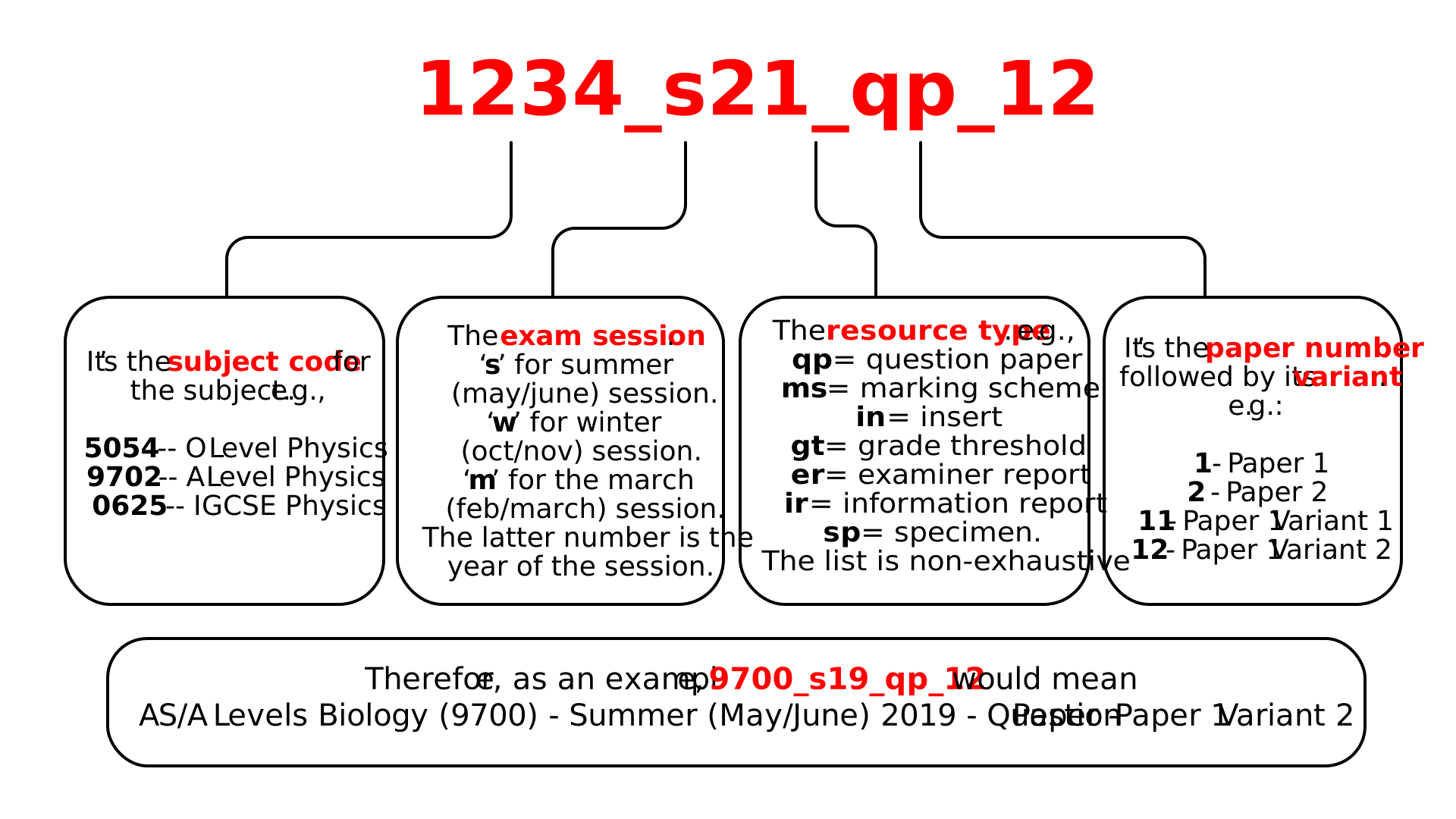
Cambridge runs three exam sessions each year, and the filename tells you which one a paper came from:
| Code | Session | Months |
|---|---|---|
| s | Summer session | May – June |
| w | Winter session | October – November |
| m | March session | February – March |
For example, 2147_s23_qp_12 is the History question paper from the summer 2023 session, paper 1, variant 2.
Past Papers File Naming System
The first four digits represent the “subject code“, the next part represents the “exam session” and year, the following word represents the “resource type“, and the last number represents the “paper number” followed by its “variant“.
How to Use These Past Papers
- Start with the most recent papers. Syllabuses change, and older papers may cover content that is no longer examined.
- Sit the paper under timed conditions before you open the mark scheme. Marking a paper you have already read teaches you very little.
- Mark it yourself using the mark scheme. Pay attention to how marks are awarded, not just whether your final answer matched.
- Read the examiner report for that session. It states exactly which questions candidates handled badly, and why.
- Check the grade threshold for that session to turn your raw mark into a realistic grade.
- Work across variants. Variants 1, 2 and 3 are different papers written for different regions, so they are extra practice rather than duplicates.
More Past Papers
Frequently Asked Questions
All available History (2147) past papers are on this page, grouped by year and exam session. Each session includes question papers, mark schemes, examiner reports and grade thresholds, and every file can be previewed or downloaded directly.
qp is the question paper, ms is the mark scheme, er is the examiner report for that session, and gt is the grade threshold showing the raw marks needed for each grade.
They identify the exam session. s means the summer session held in May and June, w means the winter session held in October and November, and m means the March session held in February and March.
Yes. Cambridge produces different variants of the same paper for different regions and time zones. They cover the same syllabus but contain different questions, so working through several variants gives you genuine extra practice.